VS Code is a useful development tool which can be used on any platform to develop code in any language of your preference. In an Azure Ubuntu VM without setting up the desktop remote access, you may want to perform development work and may want to perform debugging activities, as you are doing with local files in a Linux environment. You can use ssh extension for VS Code and create ssh connection to a VM in Azure or anywhere over ssh and work connected to the remote Linux, MacOS or Windows machines via VS Code. Let’s look at steps to connect to a Ubuntu VM on Azure using a VS Code in Windows 10 local machine.
Showing posts with label virtual. Show all posts
Showing posts with label virtual. Show all posts
Friday, 5 March 2021

Friday, 16 June 2017
Deploying Web Apps to Azure Virtual Directories
My friend Jaliya Udagedara has written nice post here, explaining how to deploy a Core web application into Azure App Service Application virtual directory. Below is comparison of few more settings you can use with Azure virtual directories.
Wednesday, 2 April 2014
07. Setup Development Workstation Base - Setup Virtual Environment for TFS 2013 - Using Virtualbox
In this step of Setup Virtual Environment for TFS 2013 - Using Virtualbox, we will setup a base machine hard disk for virtualbox so that we can use them to create development environments.
01. Setup the OS but DO NOT add to domain
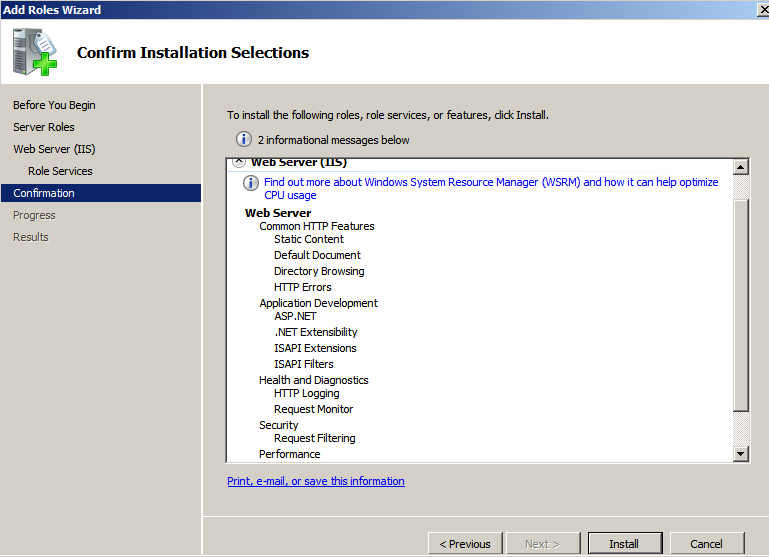
02. Setup IIS (This is not mandatory but I prefer to have IIS)
03. Run Visual Studio 2013 Setup. You need to install .Net framework for the setup to run.


04. Another requirement is IE 11

05. download from http://windows.microsoft.com/en-us/internet-explorer/ie-11-worldwide-languages


06. Now you will be able to run the setup and install VS 2013.


Install any other tools which you think might help in development. Two great tools are
Microsoft Visual Studio Team Foundation Server 2013 Power Tools
Productivity Power Tools 2013
The next step will be to create instance of the base machine and add it to the domain, which I am hoping to explain in few days.
Tuesday, 25 February 2014
06. Setup a Build Server - Setup Virtual Environment for TFS 2013 - Using Virtualbox
In this step of Setup Virtual Environment for TFS 2013 - Using Virtualbox, I will explain how to setup a build server for TFS.
01. First setup an account in PDC as TFS build service


02. Set up a new virtual machine in Oracle Virtual Box for TFS Build server. Set network to isolated internal network.


03. Change the machine name,, set IP and add to domain.


04. Select restart later and add TFA Admin account to local administrators group.


05. Restart the machine and login as TFS Admin.

06. Enable File and Printer sharing for the domain, to allow network access.

07. Run mmc and add Group Policy Object snap in to change local computer policies.


08. Add build service account for Log on as a service.

09. Install TFS.


10. Run build service configuration wizard.


11. Select the team project collection


12. If any issues related to selecting TFS server go to IE options and add tfs root to trusted sites.


13. TFS server can be connected with added to trusted sites. Select the project collection for the build server.


14. Set the number of build agents depending on the number of CPU cores.


15. Set the build service account.

16. Review and configure.


17. Close the wizard and start the build service, controller and agents.

Oops. Something is wrong. Service starts and stops suddenly. Done some search and really useful info here http://nakedalm.com/tfs-2012-issue-stuck-builds-in-team-foundation-build-with-no-build-number/
But the issue of multiple site bindings was not an issue for me here. So I did not proceed to set multipleSiteBindingsEnabled to true as specified in the above link.

18. After hour or two of search in www without any other valid solution just tried ping the TFS server from the build server. Since its shown resolving with IPv6 added below to hosts file.

19. It did the trick and Build Services are up and running for my TFS environment.

The next step is to install Visual Studio versions and any other required stuff in build server to support the developments solutions build, which I will not explain here.
For our TFS Environment in Virtual Box we need to setup a developer workstation base next.
Subscribe to:
Posts (Atom)
Popular Posts
-
As we discusssed in " Setup Redis Cluster with JSON and Search Modules on AKS with Binami Redis Using Custom Image " the cluster...
-
 Let’s look at how we can specify the artifact version to download based on the resource CI build linked to the CD pipeline and check on how ...
 -
 Can a Coded UI test executed with a Console Application? Yes it is possible. I am going to explain how it can be done. I am going to exec...
 -
 The hosts file in /etc/hosts is allowing the WSL distros to map IP addresses to domain names before going to domain name servers, similar...
 -
Pull Request are the controlled way to bring in the changes to your stable branches in your Azure Git repos, or for that matter all Git prov...

